
Industrial Automation Trends are reshaping how manufacturers cut, weld, load, transfer, inspect, polish, pack and move components across the factory floor.
What Is Industrial Automation?
Industrial automation uses machines, control systems, sensors, robots and software to perform production tasks with less manual intervention. A factory may be manual, semi-automatic or fully automatic depending on how much work is handled by people, machines and connected systems.
Automation matters because it helps factories increase repeatability, reduce errors, improve safety and stay competitive in a market where delivery time and quality expectations keep rising.
Why Industrial Automation Is Growing
Major drivers include rising labor costs, labor shortages, increasing quality demands, faster production requirements, safety improvements, global competition, digital transformation and energy efficiency. Manufacturers also want better production visibility so they can make decisions based on real data instead of guesswork.
Trend 1: Smart Factories and Industry 4.0
Smart factories connect machines, sensors, software and production teams. Industry 4.0 uses IoT devices, real-time monitoring, cloud connectivity, production analytics and predictive maintenance to help factories understand what is happening on the floor.
The result is better productivity, lower downtime and faster decision-making. Even a small factory can start with machine monitoring, production counters or digital maintenance logs before moving toward deeper integration.
Trend 2: Industrial Robots
Industrial robotics is growing because robots can handle repetitive and physically demanding work with consistent motion. Pick-and-place robots, transfer robots, machine tending robots, assembly robots and welding robots are used in automotive, engineering, electronics and packaging.
Robotic automation is especially useful when the same process is repeated many times and consistency affects output quality.
Trend 3: Automated Material Handling Systems
Automated Material Handling Systems reduce manual movement of parts between machines. Conveyors, gantry systems, loading and unloading systems, transfer systems and factory logistics automation can reduce labor, increase production speed, improve safety and lower handling damage.
Material handling automation often creates one of the clearest ROI cases because it attacks waiting time, idle time and unnecessary operator movement.
Trend 4: Gantry Robot Systems
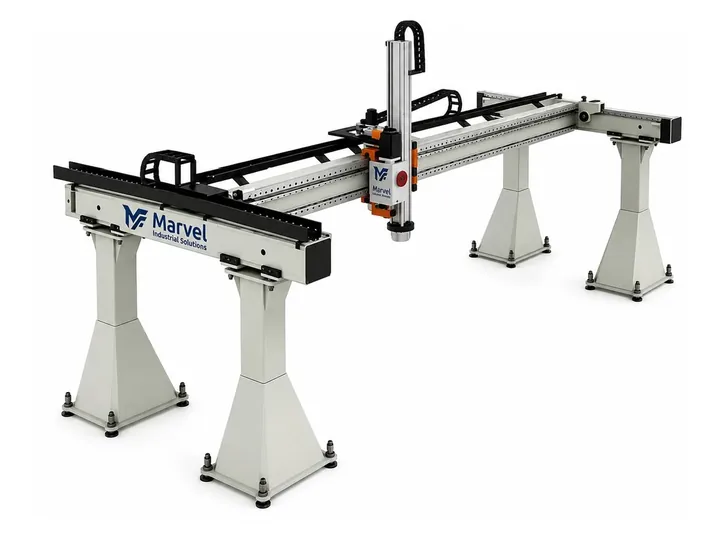
Gantry Robot Systems use X-Y-Z Cartesian motion for heavy payload handling, CNC machine loading, palletizing and pick-and-place operations. They are common in sheet metal, automotive, injection molding and packaging applications.
Gantry systems are useful when the production area needs large travel, accurate positioning and dependable movement of components.
Trend 5: Stamping Press Transfer Robots
Stamping Press Transfer Robots support press-to-press transfer, sheet loading, blank transfer and progressive die automation. They improve cycle time, operator safety, positioning accuracy and continuous production.
For press shops, automation can reduce the need for workers to operate near moving presses while improving repeatability between stations.
Trend 6: Plastic Injection Moulding Automation
Robot for Plastic Injection Moulding Machine solutions help with part removal, cooling optimization, cycle time reduction, automated stacking and quality improvement. Automation can protect finished parts from handling damage and help maintain a consistent molding cycle.
Trend 7: Laser Manufacturing Automation
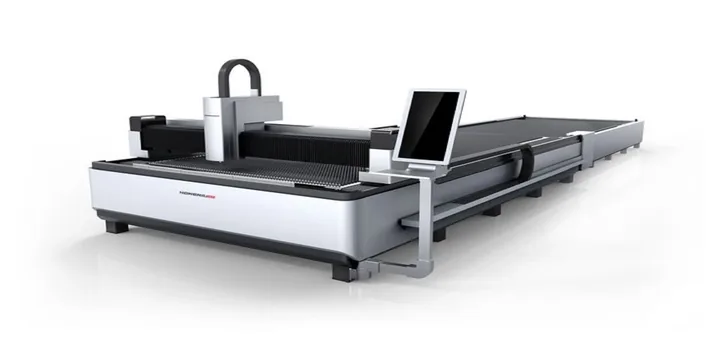
Fiber laser cutting, laser welding and laser marking are becoming part of automated manufacturing cells. Fiber Laser Cutting Machines, Laser Welding Machines and Laser Marking Machines can integrate with loading systems, robotic handling and production tracking.
Laser technology fits automation because it delivers speed, precision and repeatability for sheet metal, fabrication, marking, welding and traceability applications.
Trend 8: AI in Manufacturing
AI in manufacturing supports predictive maintenance, process optimization, quality inspection and demand forecasting. It complements automation, but it works best when factories collect reliable production data and maintain process discipline.
Trend 9: Vision Inspection Systems
Camera-based inspection systems can detect defects, verify barcodes, guide part positioning and perform OCR. Vision inspection reduces manual checking effort and improves consistency when parts must meet strict quality standards.
Trend 10: Predictive Maintenance
Predictive maintenance uses sensors, vibration analysis, temperature monitoring and maintenance alerts to identify problems before failure. Preventive and predictive maintenance together improve machine availability and reduce emergency downtime.
For maintenance planning, see the Laser Machine Maintenance Guide.
Trend 11: Energy-Efficient Manufacturing
Energy efficiency is becoming a serious manufacturing priority. Servo motors, variable frequency drives, energy monitoring, efficient laser sources, smart lighting and compressed air optimization can lower operating cost and reduce environmental impact.
Trend 12: Human-Robot Collaboration
Collaborative robots, or cobots, are designed for flexible manufacturing and suitable work near people. They can be useful for small-batch production, light handling and repetitive assistance. Traditional industrial robots remain better for high speed, heavy payload and guarded production cells.
Industry-Wise Automation Applications
| Industry | Automation Solution |
|---|---|
| Automotive | Robots, laser cutting, transfer systems |
| Sheet Metal | Fiber laser cutting, loading and material handling |
| Electrical Panels | Laser cutting, laser welding and marking |
| Injection Moulding | Part removal robots and stacking automation |
| Furniture | Laser cutting, welding and polishing automation |
| Packaging | Gantry robots and conveyors |
| Agriculture | Material handling and special purpose machines |
| Heavy Engineering | Robotic loading and custom automation |
Benefits of Industrial Automation
- Higher productivity and faster cycle times
- Improved quality and repeatability
- Lower labor dependency for repetitive tasks
- Better worker safety and ergonomics
- Reduced material waste and handling damage
- Lower operating costs over time
- Improved delivery reliability and customer satisfaction
Challenges of Automation
Automation requires initial investment, operator training, integration planning, maintenance discipline, change management and cybersecurity awareness for connected systems. These challenges can be reduced with proper planning, phased implementation and a clear ROI calculation.
How to Start Your Automation Journey
| Step | Action |
|---|---|
| 1 | Analyze production bottlenecks |
| 2 | Identify repetitive or unsafe tasks |
| 3 | Calculate ROI from labor, quality and cycle time |
| 4 | Select suitable automation technology |
| 5 | Plan installation, floor space and utilities |
| 6 | Train operators and maintenance teams |
| 7 | Monitor performance and improve gradually |
| 8 | Expand automation after proving value |
Why Choose Marvel Industrial Solution?
Marvel Industrial Solution helps manufacturers with custom special purpose machines, automatic material handling systems, gantry robot systems, stamping press transfer robots, plastic injection moulding robots, fiber laser cutting machines, laser welding machines, laser marking machines, installation, commissioning, operator training and technical support.
Explore related solutions: Custom Industrial Automation Machine, Automatic Material Handling System, Gantry Robot System, Stamping Press Transfer Robot, Robot for Plastic Injection Moulding Machine, Auto Metal Polishing Machine, Laser Machines and Contact Us.
Conclusion
Industrial Automation Trends in 2026 show a clear direction: connected machines, robotics, smart factories, predictive maintenance, automated handling and laser manufacturing are becoming essential for competitive production. The right automation plan starts with real factory bottlenecks and grows step by step.
Share your current production challenge, material flow, cycle time and expansion plan. Marvel Industrial Solution can help you evaluate practical automation options for your factory.
Request Automation Consultation