
Selecting the wrong laser power can increase cost, reduce productivity and limit the type of jobs your factory can accept. Many buyers assume higher wattage is always better, but the ideal power depends on your real production mix.
This fiber laser power guide explains how to choose laser cutting machine power for maximum return on investment.
Why Laser Power Matters
Laser power affects cutting speed, maximum cutting thickness, edge quality, production efficiency, electricity consumption, operating cost and future scalability. A machine that is too small can slow down production. A machine that is too large can increase capital cost without enough work to justify it.
What Does Laser Power Mean?
Laser power is measured in watts (W) or kilowatts (kW). Higher power means more energy is delivered to the material. For example, 1500W equals 1.5 kW, 3000W equals 3 kW, 6000W equals 6 kW, 12000W equals 12 kW and 20000W equals 20 kW.
Higher power can improve speed and thickness capacity, but it does not automatically guarantee better cutting quality. The laser source, cutting head, optics, CNC control, assist gas and operator skill must also match the application.
Factors to Consider Before Selecting Laser Power
1. Material Type
Start with the metals you cut most often. Mild steel, stainless steel, aluminum, brass, copper, galvanized steel and titanium have different absorption behavior and gas requirements. Reflective metals such as copper and brass generally require high-quality fiber laser systems, stable cutting parameters and good cutting head protection.
2. Material Thickness
Thickness is the most visible power-selection factor. Use your regular production thickness as the main reference, not only the thickest job you may receive occasionally.
| Material Thickness | Recommended Power |
|---|---|
| 1-3 mm | 1500W |
| 4-6 mm | 2000W |
| 6-12 mm | 3000W |
| 12-20 mm | 6000W |
| 20-30 mm | 12000W |
| 30 mm and above | 20000W to 30000W |
Actual performance varies by material type, assist gas, optics, chiller, machine quality and edge quality expectation.
3. Production Volume
Low-production job shops and startup fabrication businesses often do well with 1500W to 3000W machines. Growing manufacturers with daily production usually need 3000W to 6000W. High-production operations such as automotive suppliers, mass production plants and heavy fabrication units may need 6000W to 30000W.
Power Comparison Guide
1500W Fiber Laser
A 1500W fiber laser is ideal for thin sheet metal, small businesses and general fabrication. It offers lower investment, lower electricity consumption and excellent precision for suitable thickness ranges.
2000W Fiber Laser
A 2000W machine can support stainless steel fabrication, signage, kitchen equipment and electrical cabinets where thin to moderate sheet work is common.
3000W Fiber Laser
A 3000W fiber laser is one of the most popular power ranges for industrial users. It suits medium production, multiple material types and faster cutting compared with entry-level power.
6000W Fiber Laser
A 6000W machine is designed for heavy-duty production, thicker sheets and higher productivity. It can improve throughput and reduce cost per part when enough production volume exists.
12000W Fiber Laser
A 12000W fiber laser is suitable for large manufacturers, continuous operation, heavy fabrication and structural steel applications where thick material and speed matter.
20000W to 30000W Fiber Laser
Very high-power machines are used in steel processing plants, shipbuilding, heavy engineering and large-scale manufacturing. These systems need strong electrical planning, material handling and a production pipeline that can justify the investment.
Laser Power vs Cutting Speed
Higher power generally increases cutting speed, especially on medium and thick materials. The exact speed depends on material, thickness, assist gas, machine configuration and cutting parameters.
| Power | Relative Speed |
|---|---|
| 1500W | Standard |
| 3000W | About 1.5 to 2 times faster in many suitable jobs |
| 6000W | About 2 to 3 times faster in many suitable jobs |
| 12000W | About 3 to 4 times faster in many suitable jobs |
Laser Power vs Maximum Cutting Thickness
| Power | Typical Material Range |
|---|---|
| 1500W | Thin sheets |
| 3000W | Thin to medium sheets |
| 6000W | Medium to thick sheets |
| 12000W | Heavy industrial plates |
| 20000W and above | Very thick industrial plates |
Common Mistakes When Selecting Laser Power
- Buying only based on machine price
- Purchasing more power than production volume justifies
- Ignoring future production growth
- Choosing weak machine components to save cost
- Ignoring after-sales service and spare parts
- Not checking electricity, gas and chiller requirements
- Ignoring software and automation compatibility
Should You Buy Higher Power?
Choose higher power if your production volume is increasing, you plan to cut thicker materials, you need faster delivery, or future business expansion is expected. Avoid unnecessary overspending if your current production does not justify high power.
For example, a workshop cutting mostly 1-3 mm stainless steel may not need 12000W. A manufacturer cutting thicker mild steel every day may quickly outgrow 1500W. The right decision comes from real job data.
Return on Investment
The right power selection improves machine utilization, labor efficiency, delivery time, material savings, customer satisfaction and cost per part. A higher-power machine can produce better ROI only when the work volume and thickness mix allow that power to be used productively.
When comparing ROI, consider outsourcing savings, scrap reduction, finishing labor, consumables, electricity, service support and finance cost.
Industry-Wise Recommendations
| Industry | Recommended Power |
|---|---|
| Kitchen Equipment | 1500W to 3000W |
| Electrical Panels | 1500W to 3000W |
| Furniture | 1500W to 3000W |
| General Fabrication | 3000W to 6000W |
| Automotive Components | 3000W to 6000W |
| Agricultural Machinery | 6000W to 12000W |
| Heavy Fabrication | 12000W and above |
| Steel Service Centers | 20000W and above |
Maintenance Considerations
Regular maintenance helps maintain cutting performance regardless of power level. Operators should inspect nozzles, clean protective lenses, monitor chiller temperature, remove dust, check lubrication, confirm assist gas quality and follow preventive maintenance schedules.
For more practical care points, read the Fiber Laser Cutting Machine Maintenance Checklist.
How Marvel Industrial Solution Helps You Choose the Right Machine
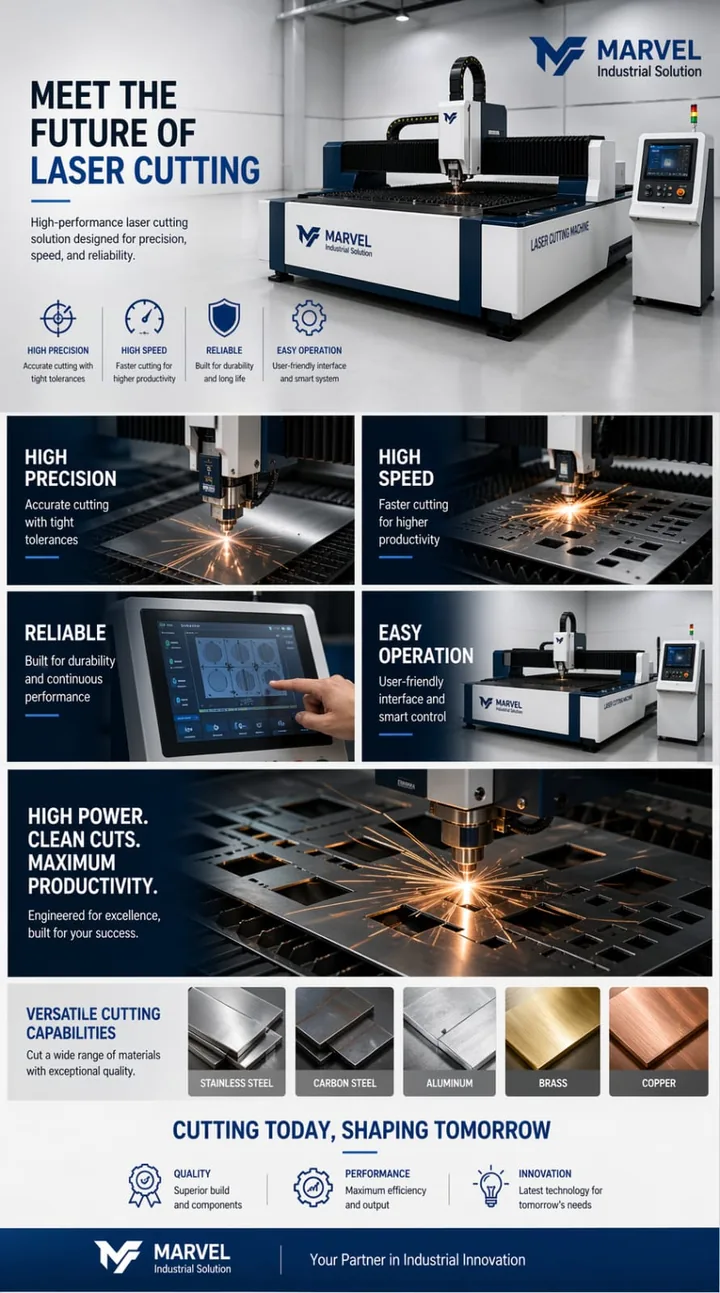
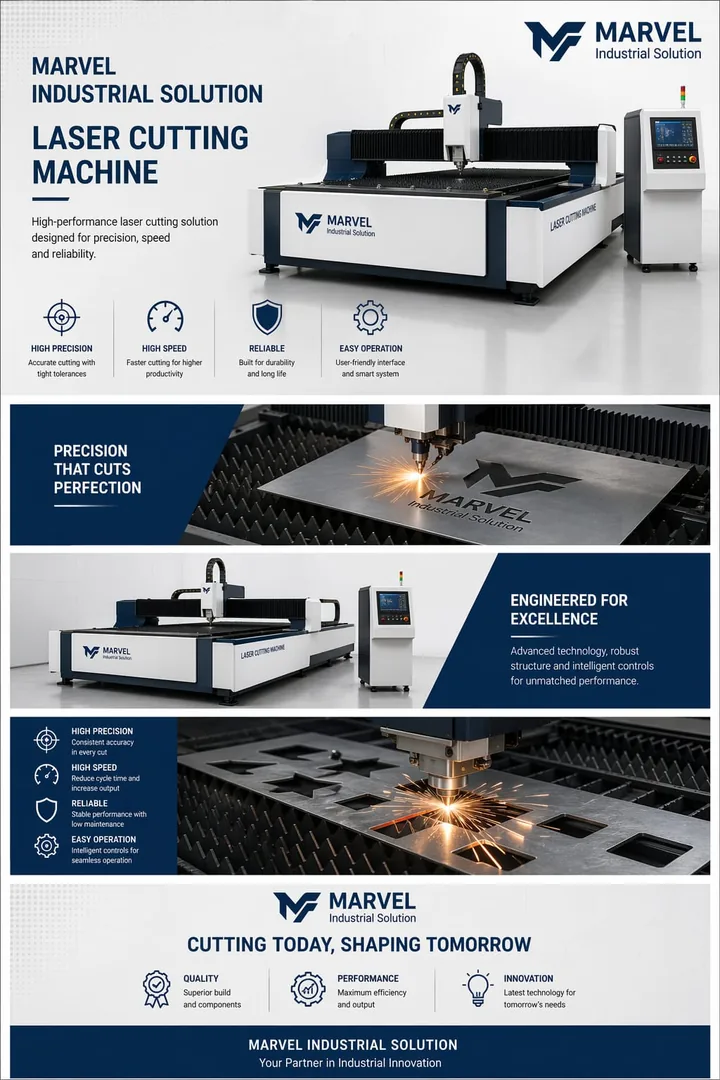
Marvel Industrial Solution supports buyers with application analysis, material discussion, machine recommendations, customized configurations, installation, commissioning, operator training, spare parts support and automation integration.
Explore related pages: Single Table Fiber Laser Cutting Machine, Exchange Table Fiber Laser Cutting Machine, Large Single Table Fiber Laser Cutting Machine, Automatic Material Handling System, Gantry Robot System, Laser Marking Machine and Laser Welding Machine.
Conclusion
How to Select Laser Power is not a one-size-fits-all question. The right fiber laser power is the one that matches your daily materials, thickness range, production volume, budget, factory infrastructure and future goals.
If you are comparing 1500W vs 3000W fiber laser, 6000W vs 12000W laser machine, or very high-power systems, start with your actual production requirement and calculate ROI carefully.
Share your material, thickness range, sheet size and monthly production target. Marvel Industrial Solution will help you select the right fiber laser power for your factory.
Request Power Selection Help