In today's competitive manufacturing environment, fabrication companies are under pressure to improve productivity, reduce operational costs and deliver high-quality products faster. Traditional cutting methods such as plasma cutting, oxy-fuel cutting and mechanical shearing often increase material wastage, slow down production and add labor cost.
Major Cost Challenges in Traditional Fabrication
Many fabrication workshops lose money through high material wastage, excessive finishing operations, slow production speed, frequent maintenance, high power consumption and inconsistent product quality. These factors directly affect profitability and customer satisfaction.
How Fiber Laser Technology Reduces Manufacturing Costs
1. Higher Cutting Speed
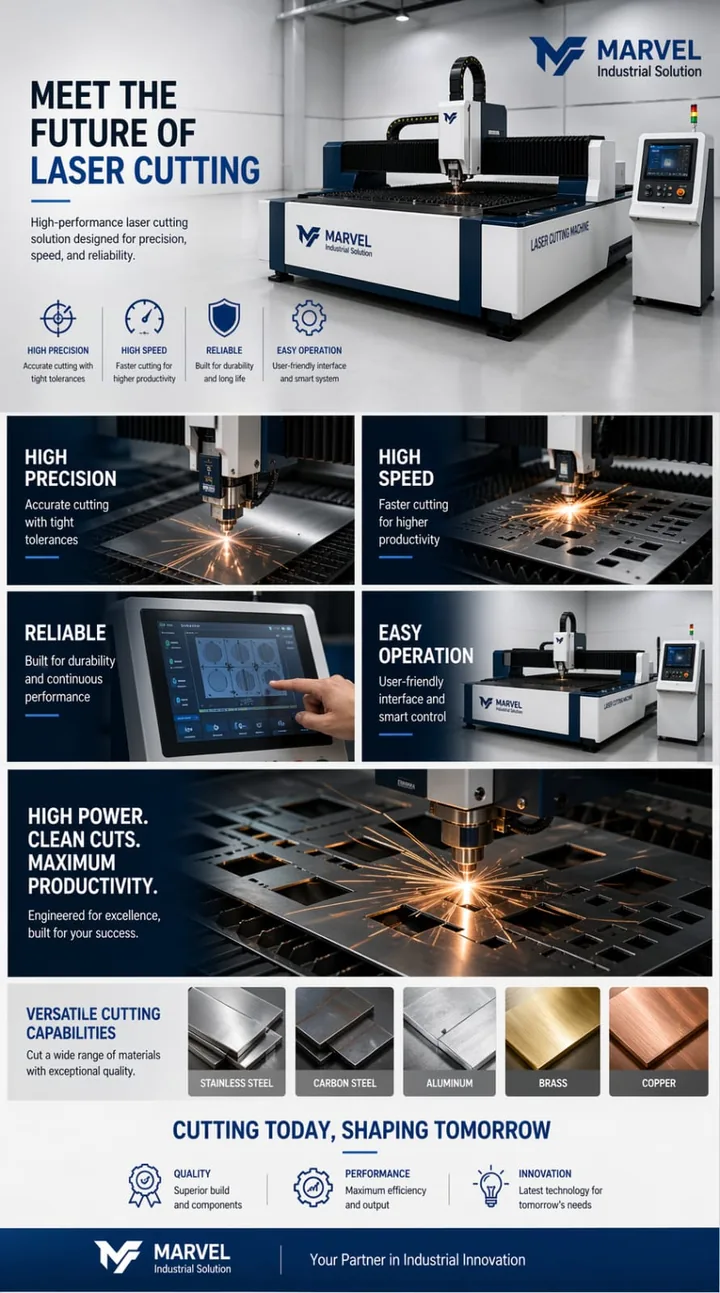
Modern fiber laser cutting machines can process stainless steel, mild steel, aluminum, brass and copper at significantly higher speeds compared to many conventional cutting methods. More jobs can be completed per shift, deliveries become faster and machine utilization improves.
2. Reduced Material Waste
Advanced CNC nesting software optimizes part placement on the sheet. Better nesting improves sheet utilization, reduces scrap generation and lowers raw material cost, which is one of the biggest expenses in fabrication.
3. Superior Cutting Accuracy
Fiber laser machines provide high positioning accuracy and repeatability. This helps manufacturers maintain consistent dimensions, reduce rejection rate and improve customer confidence in repeat production orders.
4. Minimal Secondary Operations
The clean edge quality produced by fiber laser cutting often reduces grinding, trimming and finishing work. Less secondary processing means lower labor cost, shorter production time and smoother workflow on the shop floor.
5. Lower Operating Cost
Fiber laser systems are energy-efficient and require less routine maintenance compared to many traditional cutting technologies. Reduced electricity consumption, lower maintenance expenses and longer service life all contribute to better long-term profitability.
Industries Benefiting from Fiber Laser Technology
Fiber laser cutting machines are widely used in sheet metal fabrication, electrical panel manufacturing, elevator components, automotive parts, kitchen equipment, industrial machinery, signage manufacturing and architectural metal work.
Return on Investment
Many fabrication businesses recover their investment within a few years through increased production capacity, lower operating expenses, reduced manpower requirements and improved product quality. The exact ROI depends on material type, production volume and machine configuration.
Choosing the Right Fiber Laser Cutting Machine
Before investing, manufacturers should evaluate material type, maximum thickness, production volume, future expansion plans, available floor space and automation requirements. Selecting the correct configuration helps maximize productivity and long-term profitability.
Why Choose Marvel Industrial Solution?
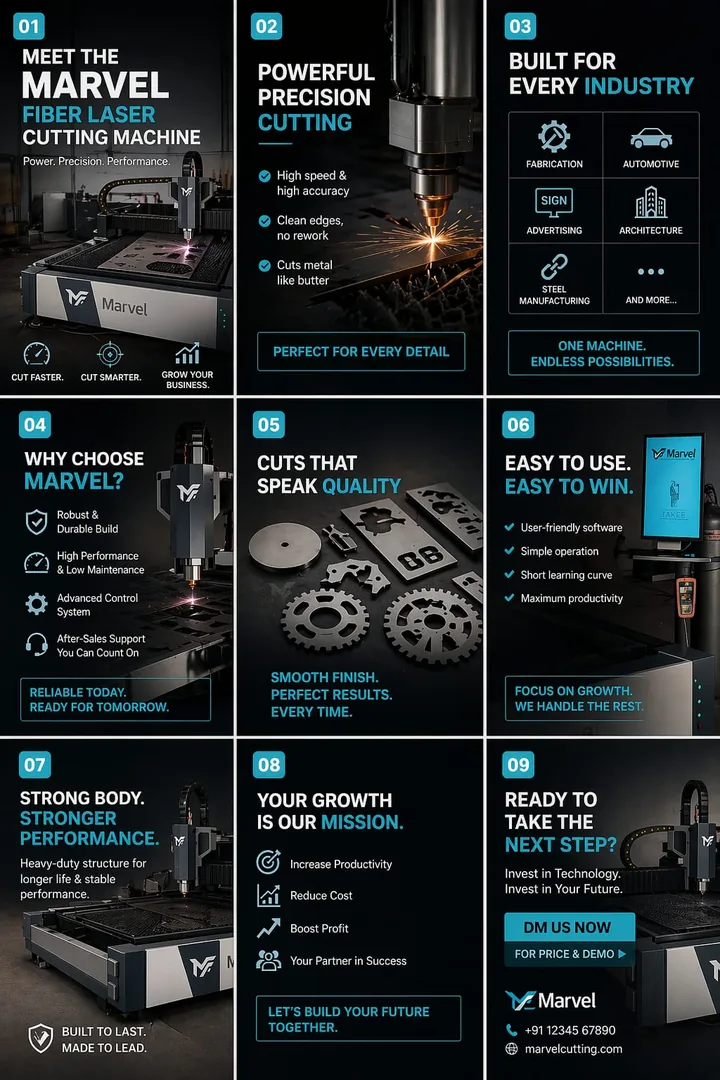
Marvel Industrial Solution provides advanced fiber laser cutting machines designed for Indian manufacturing conditions. Our machines offer high-speed precision cutting, reliable CNC control systems, power options from 1500W to high-power industrial models, installation support, operator training and after-sales service support across India.
Conclusion
Fiber laser technology is no longer a luxury. It is becoming a necessity for modern fabrication businesses. Companies that invest in efficient laser cutting systems gain a competitive advantage through lower production costs, higher productivity and improved product quality.
Planning to upgrade your fabrication facility? Contact Marvel Industrial Solution for expert guidance on selecting the right fiber laser cutting machine for your application.
Get Expert Guidance